
What Businesses Should Expect from a Modern Security Partner
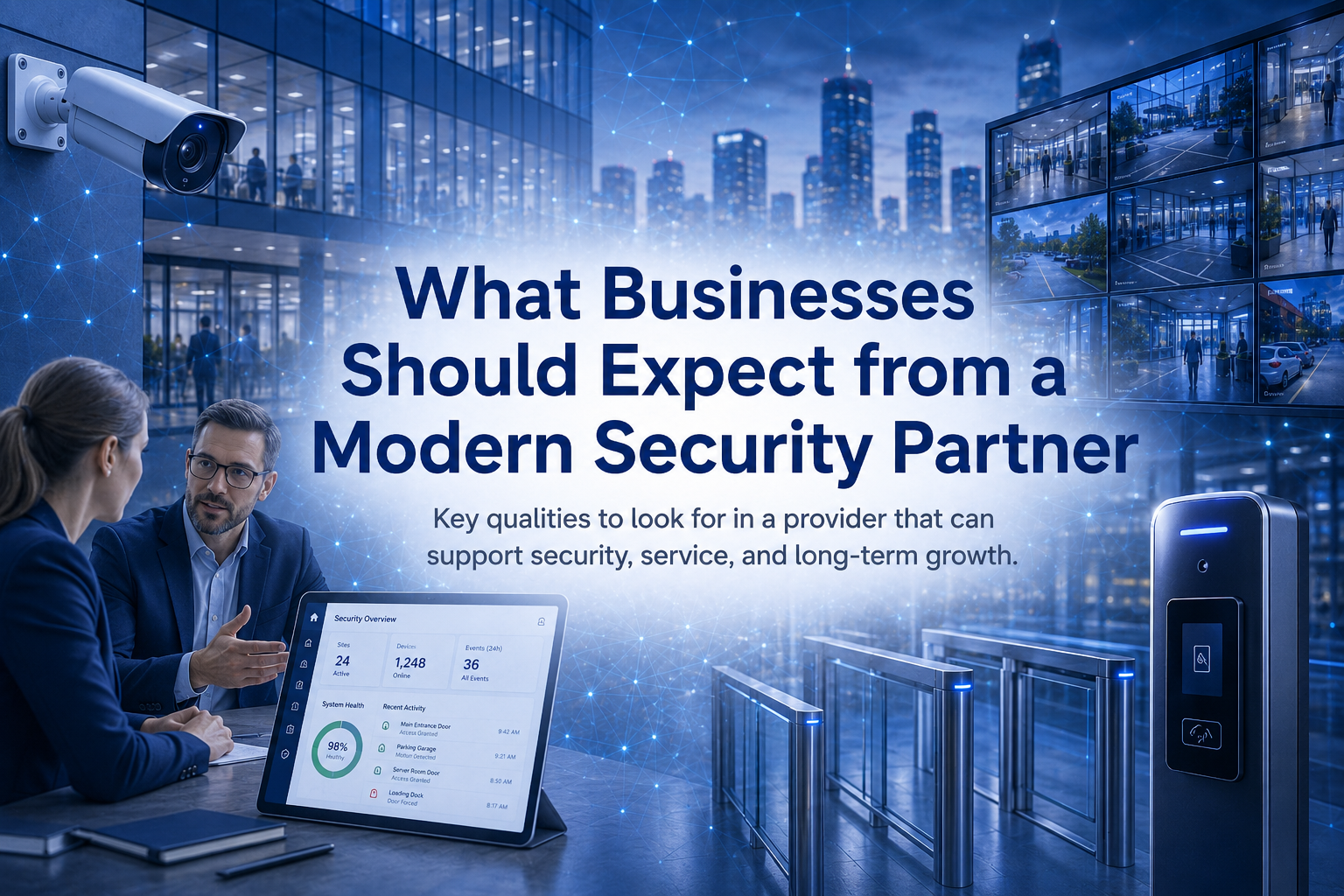
Learn what businesses should expect from a modern security partner, from long-term support and scalable solutions to practical system design and integration guidance.
Introduction
Choosing a security partner is about more than buying cameras, access control, or monitoring services. For many businesses, the right partner plays an ongoing role in how security systems are designed, managed, supported, and scaled over time. As security needs become more connected and more operationally important, businesses should expect more from a provider than basic installation and service. A modern security partner should help the business make smarter decisions, reduce complexity, and support long-term goals. Here are some of the key things businesses should expect.
A Clear Understanding of Business Needs
A modern security partner should start by understanding how the business operates. That includes the facility type, daily activity, operational priorities, growth plans, and the challenges the organization is trying to solve. The right solution is not the same for every business. An office, warehouse, healthcare facility, school, or multi-site commercial operation may all have different security requirements. A strong partner should take the time to understand those differences and recommend solutions based on real business needs rather than a one-size-fits-all approach.
Solutions That Support Long-Term Growth
Security systems should not only solve today’s problems. They should also support future growth. A modern security partner should recommend systems that can scale as the business adds locations, users, doors, cameras, or new operational requirements.
This is especially important for organizations that are planning to grow or standardize systems across multiple facilities. A partner should help businesses think beyond the initial installation and choose solutions that will remain practical over time.
Guidance on Integration and System Design
Most businesses do not benefit from security systems that operate in isolation. Video surveillance, access control, intercoms, alarms, and related technologies often work best when they are designed to support one another. A modern security partner should be able to guide businesses on how systems can work together more effectively. That includes recommending practical integration opportunities, improving overall visibility, and helping create a more connected security environment. Good system design should improve both security and day-to-day operations.
Reliable Support After Installation
Installation is only one part of the relationship. Businesses should also expect reliable support after the system is in place. That includes help with troubleshooting, service, user questions, system updates, and future adjustments as needs change. A strong security partner should remain engaged after the project is complete. If support is difficult to reach, inconsistent, or reactive instead of proactive, the business may not be getting the level of service it needs. For many organizations, long-term support is one of the most important parts of choosing the right partner.
Practical Recommendations, Not Unnecessary Complexity
A modern security partner should help simplify decisions, not make them harder. Businesses should expect practical recommendations that fit their environment, goals, and budget. That does not always mean recommending the most advanced or most expensive option. In many cases, the best solution is the one that solves the problem effectively, integrates well with current operations, and leaves room for future growth. A good partner should focus on what is useful and sustainable, not just what is available.
Knowledge of Modern Security Technology
Security technology continues to change. Cloud-based platforms, mobile credentials, remote management, integrated systems, and scalable infrastructure are becoming more common in commercial environments. Businesses should expect a modern security partner to understand how these technologies work and where they make sense. That does not mean every business needs the same approach. It means the partner should be able to explain options clearly, identify what fits the environment, and help the business make informed decisions based on operational needs.
A Focus on Long-Term Value
A modern security partner should help the business think in terms of long-term value, not just short-term project completion. That includes system performance, ease of management, future expansion, serviceability, and overall reliability. A cheaper or faster solution may not always be the better investment if it creates limitations later. Businesses should expect a partner that helps them weigh immediate needs against long-term benefits and avoid decisions that could create unnecessary cost or disruption in the future.
Final Thoughts
A modern security partner should offer more than products and installation. Businesses should expect a partner that understands their environment, recommends practical solutions, supports long-term growth, provides dependable service, and helps create a more connected and manageable security system. The right partner should make security easier to understand, easier to manage, and more aligned with the way the business operates.
To choose the right partner, businesses should look beyond equipment alone and evaluate who can provide the guidance, support, and long-term value needed to make security investments worthwhile. Protection Plus Security Services can help businesses assess their needs and implement security solutions that align with both current operations and future growth.